
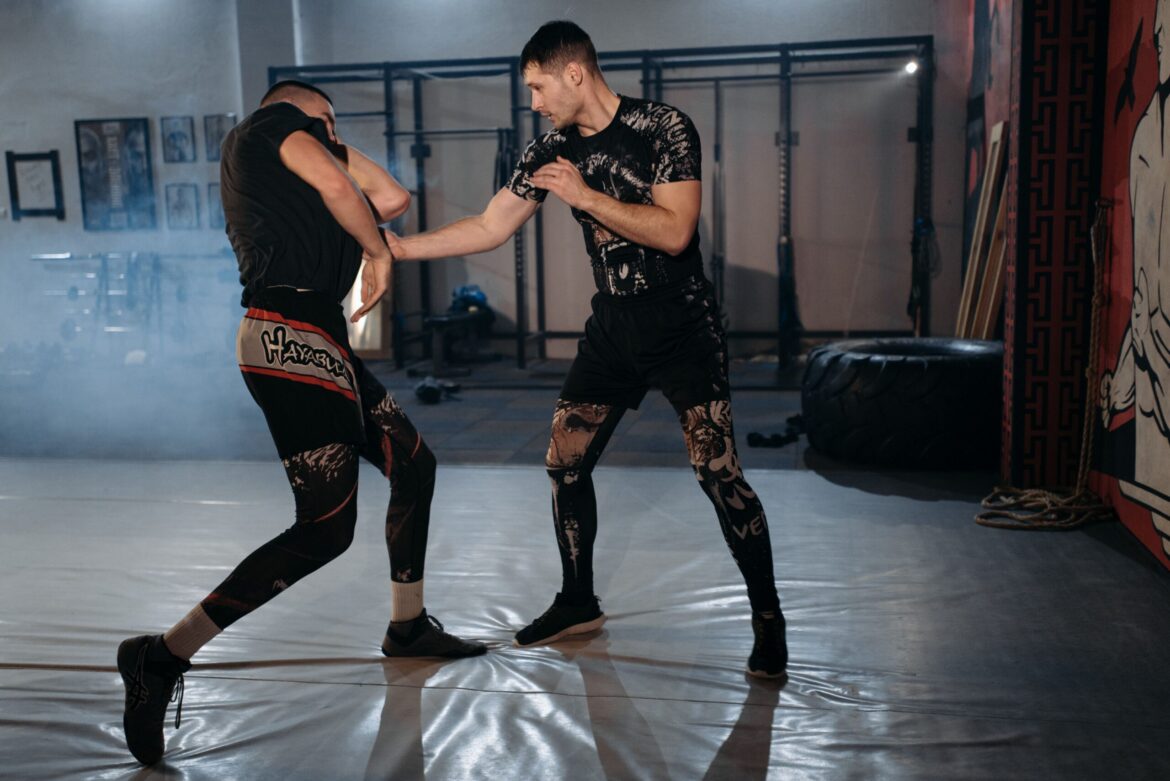
Running, cycling, recreational hockey, strength training, hiking, team sports, and other physical activities are popular ways for Ottawa residents to stay active. Each activity develops its own combination of endurance, strength, coordination, mobility, and mental focus.
However, repeatedly performing the same type of movement can sometimes make a fitness routine feel predictable. Recreational athletes may eventually start looking for another activity that challenges the body and mind differently without abandoning the sport they already enjoy.
That is where Krav Maga can provide an interesting form of cross-training.
At Krav Maga Ottawa, we help students develop practical self-defence skills while working on fitness, movement, coordination, reaction time, balance, awareness, and decision-making. For active adults throughout Ottawa, Barrhaven, Nepean, Kanata, Findlay Creek, Gloucester, Downtown Ottawa, and surrounding communities, martial arts can add variety and practical skill development to an existing fitness lifestyle.
For people searching for martial arts Ottawa, self defence Ottawa, self defence training, or beginner martial arts near me, Krav Maga offers something traditional workouts often do not: physical conditioning combined with learning how to respond, move, and make decisions in changing situations.
What Is Cross-Training?
Cross-training simply means incorporating different types of physical activity into an existing fitness routine.
A runner might add strength training.
A cyclist might include mobility work.
Someone who regularly lifts weights may add cardiovascular exercise.
The purpose is not necessarily to replace a favourite activity. Instead, different forms of exercise challenge the body in different ways.
Krav Maga can serve a similar role.
A recreational athlete who already has cardiovascular endurance or strength may discover that martial arts introduces unfamiliar demands involving coordination, directional movement, reaction, timing, and partner interaction.
That difference can make training both physically and mentally engaging.
Krav Maga Challenges More Than Cardiovascular Endurance
Runners often develop impressive cardiovascular fitness.
Cyclists may also have excellent endurance.
However, being able to maintain a steady physical effort is different from repeatedly changing speed, direction, stance, and movement patterns.
Krav Maga training can involve short bursts of activity followed by technical work and changes in intensity.
Students may move forward, backward, or laterally.
They may strike pads, reposition themselves, react to a partner, and then quickly transition to another movement.
This variety can challenge cardiovascular fitness differently from maintaining a relatively consistent running or cycling pace.
Movement Happens in Multiple Directions
Many popular forms of exercise primarily involve forward movement.
Running is the clearest example.
The body becomes efficient at moving in a relatively predictable direction.
Martial arts requires more variety.
Students may need to step backward, angle away, move laterally, pivot, change stance, or reposition around another person.
These movement patterns can introduce recreational athletes to challenges they may not encounter regularly in their main sport.
Learning to control the body while changing direction can also improve overall movement awareness.
Balance Matters More Than Many People Realize
Balance is fundamental to effective movement.
A powerful technique means very little if someone loses stability while performing it.
Krav Maga students learn to maintain a useful base while moving, striking, defending, and changing direction.
This requires continuous adjustments.
The feet, legs, core, and upper body must work together.
For runners and recreational athletes, this can provide another form of physical challenge beyond simply generating strength or endurance.
Good balance supports efficient movement and can make students feel more confident controlling their bodies.
Coordination Becomes Part of the Workout
Some workouts allow people to mentally switch into autopilot.
Martial arts usually does not.
A student may need to coordinate foot placement, body position, hand movement, timing, and distance at the same time.
At first, that can feel surprisingly difficult.
A physically fit beginner may discover that athletic conditioning does not automatically translate into martial arts coordination.
That is completely normal.
Coordination develops through practice.
Over time, movements that once required intense concentration can become more natural.
That process gives recreational athletes a new skill to develop rather than simply another way to become tired.
Reaction Time Adds an Unpredictable Element
Many individual fitness activities are relatively predictable.
A treadmill does not suddenly change direction.
A barbell does not make an independent decision.
A stationary bike does not react to the person using it.
Partner-based martial arts training introduces uncertainty.
Students need to observe what another person is doing and respond appropriately during controlled drills.
This adds reaction time to the physical challenge.
The student is not simply performing a memorized movement. They are learning to recognize information and respond.
That combination of physical movement and decision-making is one of the qualities that makes martial arts distinctive as cross-training.
Distance and Timing Require Practice
Distance is another concept that may be unfamiliar to people coming from traditional fitness activities.
In martial arts, the effectiveness of a movement depends partly on where the student is positioned relative to another person.
Too far away and a technique may not reach.
Too close and movement may become restricted.
Timing matters too.
Students gradually learn how distance changes as people move.
This introduces spatial awareness into training.
For recreational athletes accustomed to measuring performance through kilometres, repetitions, weight, or time, developing distance and timing can provide an entirely different type of challenge.
Krav Maga Can Add Functional Strength
Traditional strength training is valuable, and Krav Maga should not be viewed as a replacement for a well-designed strength program.
However, martial arts uses strength differently.
Students generate force while moving.
They stabilize the body while striking.
They maintain posture while changing direction.
They work with partners and training equipment.
The core, hips, legs, shoulders, and upper body frequently need to coordinate rather than operate independently.
This can provide a form of functional physical conditioning that complements other activities.
Core Engagement Happens Naturally
The core plays an important role in martial arts.
It helps transfer force between the lower and upper body.
It supports balance.
It contributes to posture and rotational movement.
Instead of completing only isolated abdominal exercises, students repeatedly use the core as part of larger movements.
A punch, for example, is not simply an arm movement.
Effective technique can involve the feet, legs, hips, torso, shoulder, and arm working together.
Learning that connection can improve body awareness for athletes from other disciplines.
Martial Arts Can Make Fitness Mentally Engaging
One reason people abandon fitness routines is boredom.
Repeating the same exercises can eventually feel mechanical.
Krav Maga gives the mind something to work on.
Students are learning.
They need to remember techniques.
They need to observe partners.
They must pay attention to positioning.
They need to make adjustments.
A class therefore becomes more than a sequence of exercises.
Physical conditioning happens while students are focused on developing a skill.
For some adults, this makes exercise easier to stay interested in over the long term.
Cross-Training Can Break Up Fitness Monotony
Ottawa’s active community has plenty of opportunities for outdoor exercise, from running and cycling to hiking and recreational sports.
But doing the same activity repeatedly throughout the year may eventually feel repetitive.
Adding martial arts can create variety.
Instead of another run, an athlete may spend a training session practising striking, footwork, defensive movement, and partner drills.
The next class may introduce another skill or challenge.
This variety can help keep an active lifestyle interesting.
Ottawa’s Seasons Can Affect Outdoor Training
Anyone who exercises outdoors in Ottawa understands how dramatically conditions can change.
Warm summer runs can eventually give way to colder temperatures, shorter daylight hours, snow, ice, and winter winds.
Some dedicated athletes continue outdoor training regardless of the season.
Others prefer to move part of their fitness routine indoors.
Martial arts provides an indoor training option that still involves significant physical activity.
For residents in Kanata, Barrhaven, Nepean, Findlay Creek, Gloucester, and Ottawa, adding indoor training can help create variety when outdoor conditions are less appealing.
Krav Maga Adds Practical Skill Development
Fitness alone is valuable.
Krav Maga adds another dimension because students are also learning practical self-defence concepts.
Training can include awareness, movement, positioning, distance, verbal boundaries, defensive responses, and strategies for disengaging from confrontation.
This means the time spent exercising also develops a practical skill set.
For someone comparing martial arts near me with a conventional workout, this difference may be significant.
Students are not exercising only for physical conditioning.
They are learning something at the same time.
Awareness Can Be Valuable for Outdoor Athletes
Runners, cyclists, and hikers frequently spend time outdoors.
Some train early in the morning.
Others exercise after work.
Routes may pass through residential areas, paths, parks, parking lots, or quieter streets.
Situational awareness can therefore have practical relevance.
Self-defence training encourages students to pay attention to their surroundings without becoming fearful.
That may include recognizing when headphones are reducing awareness, noticing changes in the environment, maintaining appropriate distance, or recognizing when changing direction is sensible.
The objective is not to convince outdoor athletes that their activities are dangerous.
It is simply to make awareness another part of responsible preparation.
Fitness Does Not Automatically Equal Self-Defence Ability
A strong or highly conditioned athlete may naturally feel physically confident.
However, athletic fitness and self-defence skill are not the same thing.
Someone can run a fast 10K without knowing how to establish a physical boundary.
A strong weightlifter may never have practised defensive movement.
A skilled cyclist may have excellent endurance but little experience managing distance from another person.
Krav Maga introduces these specific skills.
Athletic ability may help someone adapt to the physical demands of training, but technique still needs to be learned.
Experienced Athletes Still Get to Be Beginners
Starting a new activity can be humbling.
Someone who is highly competent in one sport may feel awkward during the first few martial arts classes.
That is not a weakness.
It is part of learning.
A runner may have excellent endurance but struggle with coordination.
A weightlifter may have considerable strength but find footwork unfamiliar.
A recreational hockey player may move well but need time to understand striking mechanics.
Being a beginner again can be valuable.
It reminds athletes that progress requires patience.
Krav Maga Can Develop Adaptability
Traditional workouts often involve knowing exactly what comes next.
A set has a specific number of repetitions.
A running route has a known distance.
A cycling workout follows a planned structure.
Martial arts introduces more variability.
Students need to respond to changing positions and movements.
This encourages adaptability.
Instead of simply executing a predetermined sequence, students learn to process information and adjust.
That ability to adapt is useful in martial arts and can also make training more mentally stimulating.
Training Under Controlled Pressure Builds Composure
Recreational competition can involve pressure.
So can martial arts.
A student may become tired during a drill while still needing to maintain technique and awareness.
That requires composure.
Training provides controlled opportunities to practise continuing to think while physically challenged.
Students learn that rushing does not necessarily improve performance.
Sometimes the better response is to reset position, breathe, observe, and move deliberately.
That combination of physical effort and mental control is another reason Krav Maga can complement other athletic activities.
Martial Arts Is Not Only for Competitive Athletes
A person does not need to consider themselves an athlete to begin.
The same training principles that challenge runners or gym enthusiasts can be introduced progressively to complete beginners.
Someone searching for beginner martial arts near me should not feel they need to complete a fitness program before trying Krav Maga.
Training itself can help develop fitness.
Students can improve endurance, strength, coordination, balance, and movement over time.
Starting ability is simply the starting point.
Recreational Athletes Can Keep Their Primary Sport
Cross-training does not mean giving up the activity someone already enjoys.
A runner can continue running.
A cyclist can keep cycling.
Someone who enjoys strength training can continue lifting.
Martial arts can become another component of the overall routine.
The objective is variety.
Different activities provide different challenges.
For some Ottawa residents, combining an established fitness interest with Krav Maga can make the overall routine more engaging and well-rounded.
Training Can Offer a Social Element
Some fitness activities are solitary.
A runner may spend an hour training alone.
Someone working out at a gym may complete an entire session with minimal interaction.
Krav Maga involves partners and instructors.
Students practise drills together.
They learn to control intensity.
They communicate.
They help each other improve.
For adults who want both physical activity and greater social interaction, this can make training appealing.
The focus remains on learning and fitness, but students are doing that work around other people pursuing similar goals.
The Best Cross-Training Is Training People Actually Enjoy
A theoretically perfect exercise program has little value if someone dislikes it enough to stop.
Consistency matters.
The best activities are often those that people genuinely look forward to doing.
Krav Maga can be particularly engaging because progress is not measured only by calories, distance, or weight.
There is always another skill to improve.
A movement can become smoother.
Timing can improve.
A defensive response can become more familiar.
Footwork can become more controlled.
That ongoing learning process gives students reasons to continue beyond simply completing another workout.
A Different Kind of Challenge for Active Ottawa Adults
Ottawa residents have many ways to remain active.
Krav Maga does not need to replace them.
Instead, it can add a different dimension to an existing fitness lifestyle.
Students can challenge cardiovascular endurance while developing coordination.
They can work on strength while learning movement.
They can improve balance while practising positioning.
They can develop reaction time while learning practical self-defence.
And they can exercise while remaining mentally engaged.
For people searching for self defence Ottawa, martial arts Ottawa, self defence classes near me, or beginner martial arts near me, this combination makes Krav Maga much more than another workout.
It becomes an opportunity to become fitter while developing a practical skill.
Add Krav Maga to an Active Ottawa Lifestyle
At Krav Maga Ottawa, we help beginners, active adults, runners, recreational athletes, and people from a wide range of fitness backgrounds develop practical self-defence skills while improving movement, coordination, balance, fitness, awareness, and confidence.
No previous martial arts experience is required. Students can begin with the fundamentals and develop their abilities through consistent training.
Residents from Ottawa, Barrhaven, Nepean, Kanata, Findlay Creek, Gloucester, Downtown Ottawa, and surrounding communities can contact us to learn more about adding Krav Maga to their fitness routine.
Krav Maga Ottawa
Call: (613) 619-KRAV (5728)
Website: www.kravmagaottawa.com
Email: kravottawa@gmail.com


