
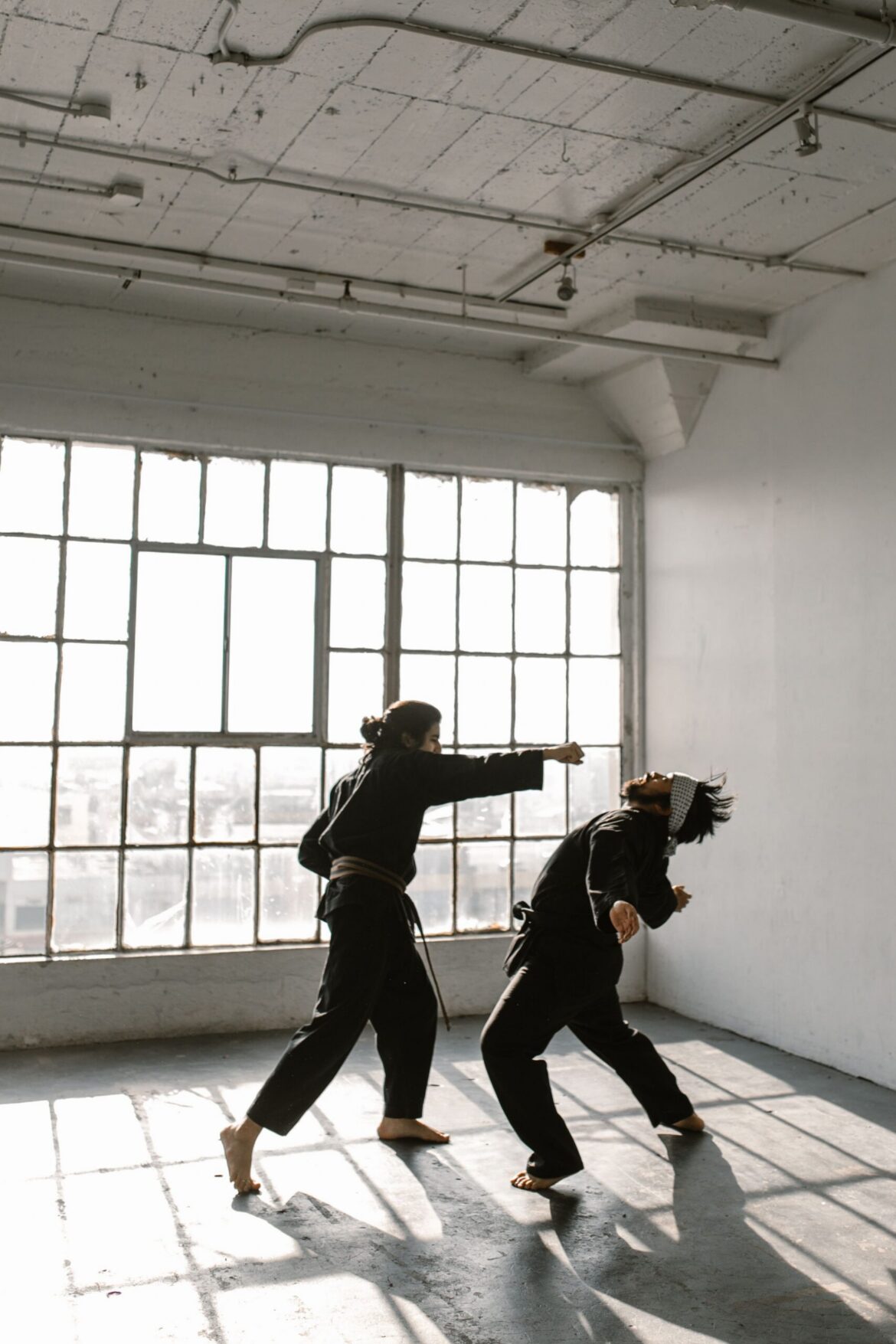
Confidence is one of the most common reasons adults become interested in martial arts. Some want to feel more comfortable walking alone. Others want greater confidence in unfamiliar environments, stronger personal boundaries, better fitness, or the reassurance that comes from knowing practical self-defence skills.
Yet there is sometimes a misconception that becoming more confident through martial arts also means becoming more aggressive.
The two are very different.
For adults throughout Ottawa, Barrhaven, Nepean, Kanata, Findlay Creek, Gloucester, Downtown Ottawa, and surrounding communities, Krav Maga can provide an opportunity to develop physical and mental confidence while reinforcing control, awareness, responsible decision-making, and avoidance of unnecessary confrontation.
At Krav Maga Ottawa, we believe practical self-defence is not about proving toughness. Training is about becoming more capable while understanding when physical action is—and is not—appropriate.
For people searching for self defence Ottawa, martial arts Ottawa, self defence training, beginner martial arts near me, or self defence classes near me, understanding this distinction can make martial arts much more approachable.
Confidence and Aggression Are Not the Same Thing
Confidence is the belief that a person can handle a situation or challenge.
Aggression involves behaviour intended to dominate, intimidate, provoke, or harm.
A confident person does not necessarily need to demonstrate physical ability to others.
In fact, greater confidence can sometimes make unnecessary confrontation less appealing.
Someone who feels insecure may believe they need to prove themselves.
Someone who understands their capabilities may be more comfortable walking away.
Martial arts training can reinforce that idea repeatedly.
Students learn physical skills, but they also learn that having those skills does not mean using them during ordinary disagreements.
Why Some Adults Lack Physical Confidence
Physical confidence can decrease for many reasons.
An adult may not have exercised regularly for several years.
Someone may never have participated in sports.
Another person may feel uncomfortable with coordination or movement.
Others simply have no experience with martial arts and do not know what to expect.
This uncertainty can create the belief that martial arts is only for naturally athletic people.
It is not.
Beginners come from different backgrounds, fitness levels, occupations, and age groups.
The purpose of training is to develop skills—not to require students to possess them before arriving.
Confidence Begins With Learning Something New
There is a particular kind of confidence that develops when someone learns a skill that once seemed intimidating.
During an early Krav Maga class, a beginner may need to think carefully about every movement.
Where should the feet go?
How should the body be positioned?
What happens next?
The process can feel unfamiliar.
With repetition, those same movements begin to make more sense.
A student suddenly realizes that something difficult a few weeks earlier has become manageable.
That experience matters.
It demonstrates that ability is not fixed.
People can improve.
This is one reason martial arts can build confidence in a way that feels genuine rather than superficial.
Progress Creates Evidence of Capability
Confidence is strongest when it is supported by experience.
Simply telling someone to “be more confident” rarely changes much.
Martial arts provides measurable experiences.
A student may notice better balance.
A defensive movement becomes smoother.
Cardiovascular endurance improves.
A combination becomes easier to remember.
The student responds more quickly during a drill.
These improvements provide evidence.
Instead of merely thinking, “Maybe I can do this,” the student knows progress has already happened.
That evidence can gradually change how someone sees their own capabilities.
Physical Fitness Can Influence Confidence
Feeling physically capable can affect everyday confidence.
Krav Maga training challenges multiple aspects of fitness, including:
- Cardiovascular endurance
- Functional strength
- Coordination
- Balance
- Mobility
- Reaction time
- Body awareness
Improvement in these areas can make people feel more comfortable using their bodies.
An adult who previously felt awkward during physical activity may begin moving with greater control.
Someone who tired quickly may notice improved stamina.
Another student may discover strength they did not realize they possessed.
These changes are not only physical accomplishments. They can also influence mindset.
Confidence Does Not Require Looking Intimidating
Martial arts sometimes carries an image of toughness, serious expressions, and intimidation.
Real confidence does not require any of that.
Students do not need to look aggressive.
They do not need to behave aggressively.
They do not need to tell other people that they train.
A person can be calm, friendly, and respectful while still having strong boundaries and practical physical skills.
That combination is often much more useful than trying to appear threatening.
Krav Maga Teaches the Value of Avoidance
One of the most important lessons in practical self-defence is knowing when not to fight.
If a dangerous situation can be avoided, avoidance is usually preferable.
If someone can leave safely, leaving can be the right decision.
If creating distance prevents a confrontation, that is a successful outcome.
Training should not encourage students to interpret every disagreement as an opportunity to use physical skills.
The purpose of self-defence is safety.
That means physical action is only one option within a much larger decision-making process.
Situational Awareness Supports Calm Confidence
Confidence becomes more useful when combined with awareness.
Situational awareness means remaining present enough to understand what is happening in the immediate environment.
For an Ottawa resident, this might involve paying attention while walking through a parking garage, waiting for transportation, leaving a workplace after dark, or travelling through an unfamiliar part of the city.
Awareness does not mean expecting danger.
It means noticing meaningful changes.
Someone who recognizes an uncomfortable situation early may have time to change direction, create distance, move toward other people, or leave.
Having options can support calm decision-making.
Personal Boundaries Are a Form of Confidence
Some people find it difficult to establish boundaries.
They may worry about appearing rude.
They may continue engaging with someone even after becoming uncomfortable.
They may speak so quietly that the boundary is unclear.
Self-defence training can help students practise confident communication.
A clear:
“No.”
“Stop.”
or
“Stay back.”
does not need to be aggressive.
It is simply direct.
The goal is not to escalate a situation.
The goal is to communicate a boundary clearly enough that there is less ambiguity.
Body Language Can Change With Training
Physical confidence often becomes visible through body language.
As students become more comfortable with movement, they may naturally develop stronger posture, improved balance, and more deliberate movement.
They may become more comfortable looking toward another person while communicating.
These changes are not about trying to intimidate anyone.
They are signs of greater comfort in one’s own body.
For adults who have spent years feeling physically hesitant, that can be a meaningful change.
Learning to Stay Controlled Under Pressure
Confidence is easy when everything is comfortable.
The real test comes when something becomes difficult.
Martial arts provides controlled opportunities to experience pressure.
A drill may become more physically demanding.
A student may need to make a decision quickly.
A technique may not work correctly on the first attempt.
Fatigue may make concentration harder.
Students learn to continue functioning without becoming overwhelmed.
They breathe.
They reset.
They listen.
They try again.
This process helps develop composure.
Emotional Control Matters in Self-Defence
A person who knows physical techniques but cannot control anger may create unnecessary problems.
That is why emotional control matters.
Self-defence is not about responding physically every time someone says something offensive or behaves rudely.
Sometimes the strongest response is disengagement.
Students can learn to distinguish between ego and safety.
Someone insulting a person is not automatically the same as an immediate physical threat.
Recognizing that difference can prevent unnecessary escalation.
Confidence helps because a person who does not feel the need to prove anything may find it easier to walk away.
Martial Arts Can Help Adults Become More Comfortable With Challenge
Many adults build routines designed around predictability.
Work follows familiar patterns.
Exercise may follow the same routine.
Daily responsibilities become repetitive.
Trying martial arts introduces a different type of challenge.
Students need to learn unfamiliar movements.
They work with training partners.
They receive corrections.
They occasionally make mistakes in front of others.
This can feel uncomfortable initially.
But becoming comfortable with being temporarily uncomfortable is itself a valuable skill.
Over time, students may become more willing to attempt difficult things because they have repeatedly experienced themselves learning through uncertainty.
Beginners Do Not Have to Prove Anything
A first martial arts class can feel intimidating.
People sometimes imagine everyone else will already be highly experienced.
They may worry about being the least fit person in the room.
They may assume mistakes will be embarrassing.
These concerns are common but unnecessary.
Beginners are expected to be learning.
They do not need to prove toughness.
They do not need to compete with advanced students.
They simply need to begin.
For adults searching for beginner martial arts near me in Ottawa, this is an important message.
Everyone starts somewhere.
Confidence for Women Does Not Need to Be Fear-Based
Women are often exposed to personal-safety advice that focuses heavily on danger.
Self-defence training can offer a more capability-focused approach.
Instead of concentrating only on everything that could go wrong, training can focus on what skills can be developed.
Women can practise:
Awareness.
Movement.
Personal boundaries.
Physical techniques.
Fitness.
Communication.
Decision-making.
This can support confidence without suggesting that women should be afraid of everyday life.
For those searching for women’s self-defense classes Ottawa or women self-defense classes near me, the goal should be greater capability—not greater fear.
Confidence Can Benefit Busy Professionals
Professionals throughout Downtown Ottawa, Kanata, Nepean, Gloucester, and surrounding areas often spend much of their day communicating, making decisions, managing responsibilities, and handling pressure.
Yet professional confidence does not always translate into physical confidence.
Someone may be highly capable at work while feeling uncertain in a martial arts environment.
Training provides an opportunity to develop a different kind of confidence.
It is based on movement, physical capability, learning, and composure.
The mental break can also be valuable.
During a Krav Maga class, attention moves away from emails, deadlines, and meetings.
Students focus on the immediate task.
Confidence Can Help With Everyday Decision-Making
The benefits of training do not need to remain inside the martial arts environment.
Learning to make decisions while under controlled pressure can reinforce decisiveness elsewhere.
A student becomes accustomed to observing, choosing a response, and acting.
That does not mean martial arts automatically transforms every aspect of someone’s personality.
However, repeatedly practising decisive movement can help people become more comfortable trusting their ability to respond.
Sometimes the most useful decision is moving away.
Sometimes it is establishing a boundary.
Sometimes it is asking for assistance.
And if physical safety genuinely requires action, training provides additional options.
Humility Is an Important Part of Confidence
The more people learn about practical self-defence, the more they often understand its limitations.
No technique is guaranteed.
No person is invincible.
Real situations are unpredictable.
This understanding should create humility.
Students can become more capable while also becoming more realistic about risk.
That is healthy confidence.
It says:
“I have trained and developed useful skills, but I still make sensible decisions.”
That mindset is very different from believing martial arts makes someone unbeatable.
Consistency Builds Confidence Gradually
Confidence rarely appears after one class.
It develops through repetition.
Students train.
They make mistakes.
They improve.
They become fitter.
They learn new techniques.
They encounter new challenges.
They discover that progress continues.
Week by week, training becomes more familiar.
This is why consistent self defence training in Ottawa matters.
Skills need time to develop, and confidence grows alongside them.
Local Training Makes Consistency More Realistic
Ottawa residents already have demanding schedules.
Someone living in Barrhaven may balance commuting and family responsibilities.
A professional in Downtown Ottawa may have long workdays.
Families in Kanata, Nepean, Findlay Creek, or Gloucester may be coordinating school, activities, and appointments.
Training needs to fit realistically into life.
A sustainable routine is more valuable than an ambitious plan that lasts only a few weeks.
Consistency allows students to experience the gradual improvements that create genuine confidence.
Martial Arts Confidence Is About Capability, Not Ego
The most useful confidence is quiet.
It does not need constant validation.
It does not require showing other people what has been learned.
It does not encourage unnecessary risk.
Instead, martial arts confidence comes from knowing that time and effort have been invested in becoming more capable.
Students know they are fitter than when they began.
They know they have practised difficult movements.
They know they can learn.
They understand awareness and boundaries.
They have experience working through physical and mental challenges.
That knowledge can create a sense of confidence that does not depend on aggression.
Why Krav Maga Appeals to Adults Looking for Practical Growth
Adults often want more from an activity than simple entertainment.
They want their time to produce meaningful value.
Krav Maga combines several areas of development:
Physical fitness.
Practical self-defence.
Awareness.
Confidence.
Coordination.
Decision-making.
Stress management.
Discipline.
Personal boundaries.
For people searching for martial arts Ottawa, self defence Ottawa, self defence classes near me, or beginner martial arts near me, this combination can make training particularly appealing.
Instead of simply completing another workout, students are developing skills.
Stronger Does Not Have to Mean More Aggressive
Becoming physically and mentally stronger does not require becoming confrontational.
In many ways, greater capability can create greater control.
Students can learn that walking away is not weakness.
Clear boundaries are not aggression.
Awareness is not fear.
Confidence is not arrogance.
And physical self-defence is not the same as fighting for ego.
These distinctions are essential.
Krav Maga should help students become better prepared while continuing to make responsible decisions.
That is the kind of confidence that has value far beyond the training floor.
Build Practical Confidence With Krav Maga Ottawa
At Krav Maga Ottawa, we help students develop practical self-defence skills, physical fitness, situational awareness, coordination, confidence, and responsible decision-making through structured martial arts training.
Whether someone is completely new to martial arts or looking for a practical way to become stronger and more confident, we provide training designed to help students develop their abilities through consistent practice.
Adults from Ottawa, Barrhaven, Nepean, Kanata, Findlay Creek, Gloucester, Downtown Ottawa, and surrounding communities can contact us to learn more about current training opportunities.
Krav Maga Ottawa
Call: (613) 619-KRAV (5728)
Website: www.kravmagaottawa.com
Email: kravottawa@gmail.com


