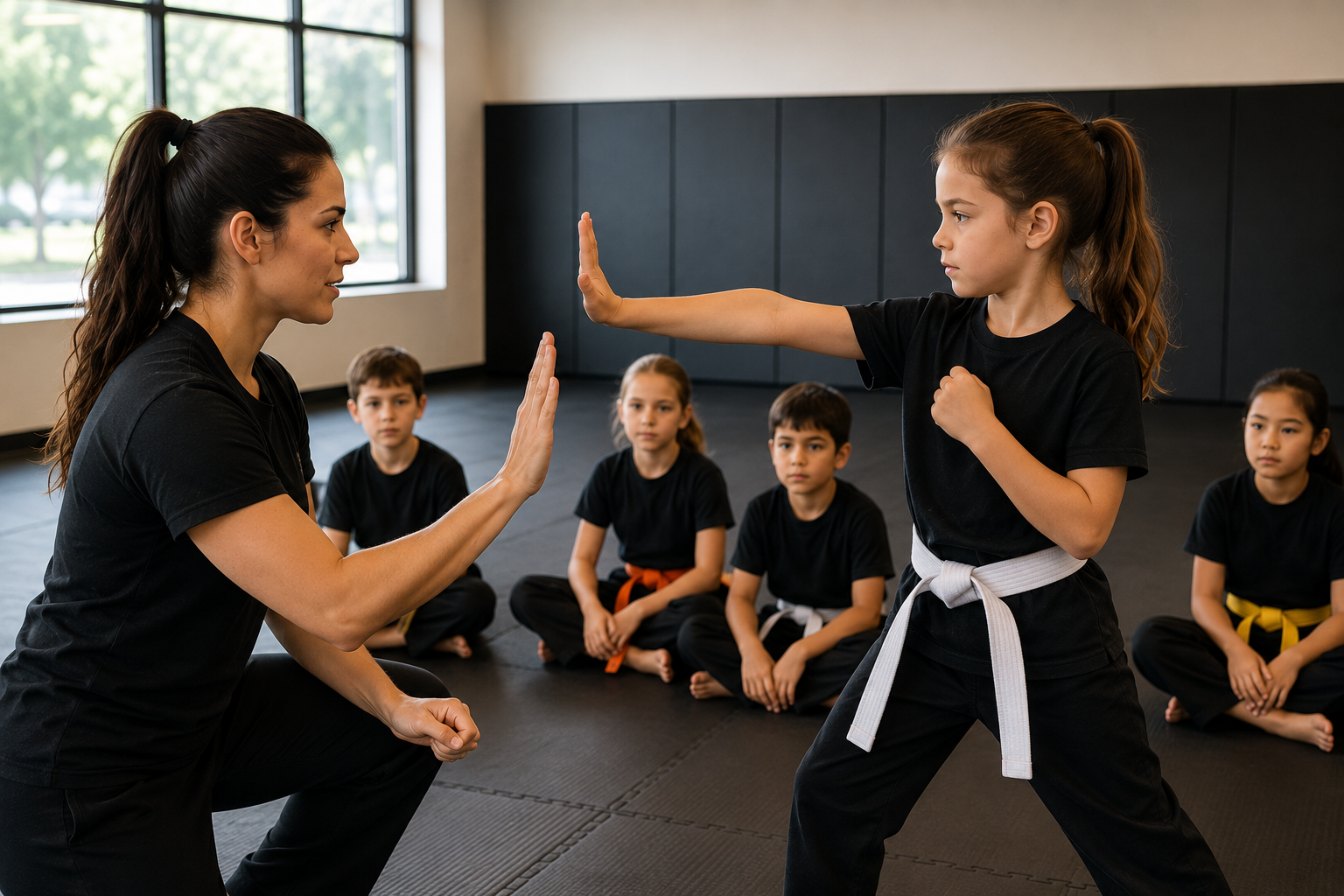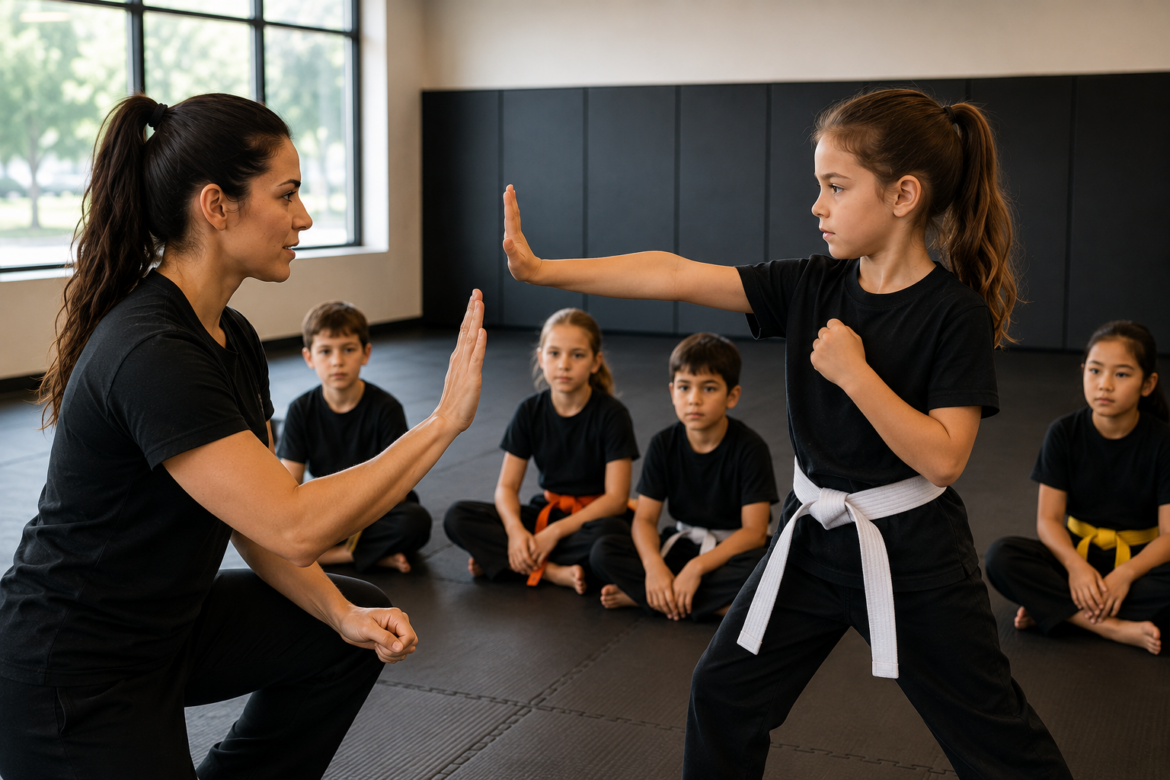
Parents naturally want their children to be safe. Yet personal safety is not only about teaching children what to do during an emergency. Some of the most useful lessons begin much earlier—with confidence, communication, awareness, personal boundaries, and knowing when to seek help.
For families throughout Ottawa, Barrhaven, Nepean, Kanata, Findlay Creek, Gloucester, and surrounding communities, martial arts can provide children with a structured environment where these skills are practised alongside physical fitness and age-appropriate self-defence.
At Krav Maga Ottawa, we believe children’s self-defence should never be centred on encouraging aggression. The goal is to help young people become more aware, confident, responsible, and capable of making sensible decisions.
For parents searching for kids martial arts Ottawa, martial arts near me for kids, self defence training Ottawa, or self defence classes near me, understanding the connection between boundaries and practical self-defence is an important place to begin.
Personal Safety Starts Before a Physical Situation
When people hear the term “self-defence,” they often picture punches, escapes, blocks, or other physical techniques.
Those skills can have a place in appropriate training, but physical techniques are only one part of personal safety.
Children can also learn to recognize when something does not feel right, understand personal space, communicate clearly, move away from uncomfortable situations, and find a trusted adult.
These skills matter because the safest confrontation is often the one that never becomes physical.
Age-appropriate martial arts training can reinforce this principle from the beginning.
What Are Personal Boundaries?
Personal boundaries help children understand what they are and are not comfortable with.
They can involve physical space, communication, behaviour, and social interactions.
A child might experience a boundary issue when another person repeatedly stands too close, grabs something from them, refuses to stop unwanted behaviour, pressures them to do something, or ignores a clear request to stop.
Children do not need to become suspicious of everyone around them.
Instead, they need to understand that their comfort and personal space matter.
Just as importantly, they need to learn to respect the boundaries of other people.
Martial arts creates many opportunities to practise this concept.
Partner Training Teaches Mutual Respect
Many martial arts exercises involve working with another student.
For these drills to work properly, both children must cooperate.
One child may hold training equipment while another practises a controlled technique. Students may switch roles, follow instructions, and adjust their movements according to the exercise.
This teaches an important lesson:
Having physical ability does not remove the responsibility to use control.
Students learn that their training partner deserves respect.
They cannot simply use excessive force because they know a technique.
This connection between ability and responsibility is one of the most valuable lessons martial arts can offer children.
Children Need Permission to Speak Up
Adults sometimes underestimate how difficult it can be for children to speak firmly when they feel uncomfortable.
Children are frequently taught to be polite, listen to adults, avoid interrupting, and follow instructions.
Those are generally useful social expectations.
However, children also need to understand that there are situations where speaking clearly and confidently is appropriate.
Age-appropriate self-defence training can help children practise simple verbal responses.
A confident:
“Stop.”
“No.”
or
“Stay back.”
can be very different from quietly hoping an uncomfortable situation ends.
The purpose is not to teach children to shout at everyone.
It is to help them understand that their voice can be part of their personal-safety toolkit.
Confident Body Language Matters Too
Communication is not limited to words.
Posture, eye contact, movement, and tone can all influence how confidently a child communicates.
Children who feel unsure may naturally shrink their posture, look downward, or speak very quietly.
Martial arts gives them repeated opportunities to stand with greater stability, look toward an instructor or training partner, listen carefully, and respond clearly.
These habits can gradually build physical confidence.
For families searching for martial arts Ottawa kids, this can be just as valuable as learning the physical techniques themselves.
Awareness Should Be Taught Without Creating Fear
There is an important difference between awareness and anxiety.
Children should not grow up believing danger is everywhere.
At the same time, they can learn simple habits that help them remain aware of their surroundings.
For example, children can learn to know where their parent or guardian is when visiting a busy public place.
They can understand what to do if they become separated.
They can learn which adults may be appropriate to approach for help.
Older children can learn to pay attention when walking rather than becoming completely absorbed in a device.
These are practical habits.
The objective is confidence and preparedness—not fear.
Knowing When to Leave Is a Self-Defence Skill
Children sometimes associate bravery with standing their ground.
In real-world personal safety, leaving can be the smarter choice.
Martial arts training can reinforce the idea that avoiding unnecessary conflict is a success.
If a child can move away from an argument, find an adult, or leave an uncomfortable situation, there may be no reason for physical involvement.
This is particularly important when teaching children about self-defence.
Physical skills should not become tools for proving toughness.
They should be options for situations where safety genuinely requires them.
Self-Defence Is Not Permission to Fight
Parents understandably want to know whether martial arts could make a child more aggressive.
Good children’s training should emphasize exactly the opposite.
Students should learn control, responsibility, awareness, and appropriate decision-making.
Knowing how to perform a technique does not mean it should be used during every disagreement.
Children can be taught the difference between:
A disagreement.
Teasing.
An uncomfortable interaction.
Bullying.
An immediate physical safety concern.
These situations are not identical and should not automatically receive the same response.
Understanding that difference helps children make better choices.
What About Bullying?
Bullying is a major concern for many parents.
Martial arts cannot guarantee that a child will never experience bullying, nor should physical fighting be presented as the universal solution.
However, training can support several qualities that may help children navigate difficult social situations.
These include:
- Greater confidence
- Clearer communication
- Awareness of personal boundaries
- Emotional control
- Willingness to seek help
- Improved posture and body language
- Age-appropriate self-defence skills
Children can learn that asking a teacher, parent, coach, or another trusted adult for help is not weakness.
It is a sensible response when a situation cannot be handled safely alone.
Confidence Can Help Children Communicate Earlier
A child who lacks confidence may remain silent about uncomfortable situations.
They may worry about being embarrassed, causing trouble, or not being believed.
Building confidence can make it easier for children to communicate when something is wrong.
Martial arts provides small, repeated opportunities for children to use their voice.
They answer questions.
They interact with instructors.
They work with partners.
They attempt unfamiliar movements.
They recover from mistakes.
Over time, these experiences can help children become more comfortable expressing themselves.
Emotional Control Is Part of Personal Safety
Knowing how to calm down matters.
Children may make poor decisions when they are extremely angry, frightened, or frustrated.
Martial arts training regularly creates manageable challenges.
A child may not perform a technique correctly.
They may become tired.
A partner may move differently than expected.
The instructor may ask them to try again.
These are opportunities to practise emotional control.
Instead of reacting impulsively, students learn to reset, listen, adjust, and continue.
That skill can be extremely valuable during disagreements outside class.
Learning to Handle Frustration Without Aggression
Children need to know that feeling angry is normal.
Aggressive behaviour is not the only way to express that emotion.
Martial arts can provide an environment where children experience physical intensity while still being expected to remain controlled.
Students learn that they can work hard without losing control.
They can become frustrated without taking that frustration out on another person.
They can make mistakes without blaming someone else.
This is an important part of developing maturity.
Physical Skills Should Be Age-Appropriate
Children are not small adults.
Self-defence training should reflect their age, maturity, physical development, and ability to understand instructions.
The goal should not be overwhelming children with frightening scenarios.
Training can instead introduce appropriate concepts gradually.
Younger students may focus heavily on awareness, listening, movement, confidence, boundaries, and simple physical responses.
As children mature, instruction can evolve with them.
Progressive training helps keep learning practical without making personal safety unnecessarily intimidating.
Parents Can Reinforce Boundaries at Home
Martial arts training works best when positive lessons are reinforced outside class.
Parents can support boundary awareness through everyday conversations.
For example, families can discuss what a child should do if they become separated in a shopping centre.
Parents can talk about trusted adults.
They can encourage children to speak up when something genuinely makes them uncomfortable.
They can also reinforce the importance of respecting other people’s boundaries.
These conversations do not need to be frightening.
They can simply become part of teaching children how to navigate the world responsibly.
Children Also Need to Respect Other People’s Boundaries
Personal boundaries work both ways.
Children should understand that they have the right to reasonable boundaries, but so do their classmates, siblings, friends, and training partners.
If another child says stop during ordinary play, that request matters.
If a training partner needs an exercise to slow down, students should listen.
If someone does not want to participate in a particular social interaction, that boundary deserves respect.
Martial arts provides an excellent setting for teaching this because controlled partner work depends on cooperation.
Martial Arts Can Strengthen Decision-Making
Self-defence is ultimately about decisions.
Should the child move away?
Should they use their voice?
Should they find an adult?
Should they avoid becoming involved?
Is there an immediate physical danger?
Training cannot reproduce every possible real-world situation, but it can help children become accustomed to thinking before acting.
That ability becomes increasingly valuable as children become teenagers and gain greater independence.
Situational Awareness Changes as Children Get Older
The type of awareness appropriate for an eight-year-old differs from what may be appropriate for a teenager.
Young children often spend most of their time under direct adult supervision.
Teenagers may travel independently, take public transportation, meet friends, attend events, work part-time jobs, or spend more time away from parents.
As independence increases, awareness becomes increasingly important.
Teens can benefit from understanding concepts involving distance, surroundings, distractions, exits, communication, and decision-making.
For Ottawa families, these lessons can be particularly relevant as young people begin travelling independently through Downtown Ottawa, Nepean, Kanata, Barrhaven, Gloucester, and other areas.
Screen Distraction Is Worth Discussing
Phones have become part of everyday life for older children and teenagers.
They are useful tools, but they can also absorb attention.
Walking while completely focused on a screen can reduce awareness of traffic, other pedestrians, surroundings, and changing situations.
Teaching young people to occasionally look up and remain aware is a simple personal-safety habit.
Again, this does not require fear.
It simply requires presence.
Situational awareness should eventually become as routine as looking both ways before crossing a street.
Fitness Supports Confidence and Capability
Children’s self-defence training also provides physical benefits.
Regular martial arts activity can help children develop:
- Coordination
- Balance
- Agility
- Stamina
- Mobility
- General strength
- Body awareness
Physical improvement can contribute to confidence.
A child who becomes more comfortable moving may feel more capable participating in other activities.
This is particularly valuable for children who have not connected with conventional team sports.
Why Beginners Can Start Without Previous Experience
Parents searching for beginner martial arts near me sometimes wonder whether their child should already have certain physical abilities.
Previous experience is not necessary.
Children come to martial arts with different strengths.
One child may be highly energetic but struggle with focus.
Another may listen carefully but feel physically hesitant.
Some may already participate in several sports.
Others may be trying structured physical activity for the first time.
Martial arts gives each child opportunities to develop.
The purpose of beginner training is to teach beginners.
Why Consistency Matters
Personal-safety skills are not built through one conversation.
Neither are martial arts skills.
Children learn through repetition.
They hear the same principles in different situations.
They practise movement repeatedly.
They become more comfortable speaking clearly.
They gradually understand boundaries, control, awareness, and responsibility.
This is why regular training matters.
Consistency gives lessons time to become habits.
For families throughout Ottawa, Barrhaven, Nepean, Kanata, Findlay Creek, and Gloucester, choosing a local martial arts program that fits realistically into the family schedule can make long-term participation easier.
Self-Defence Should Make Children More Confident, Not More Fearful
This principle matters enormously.
Children should leave appropriate self-defence training feeling more capable—not believing that everyone represents a danger.
They should understand that most everyday interactions are normal.
At the same time, they can learn what to do when something genuinely feels wrong.
They can use their voice.
They can move away.
They can seek help.
They can establish boundaries.
And when physical safety truly requires action, appropriate martial arts training can give them additional options.
That is a balanced approach to children’s self-defence.
Building Skills Children Can Carry Into Their Teen Years
The value of learning boundaries and awareness extends far beyond childhood.
As children grow older, they face new environments, relationships, responsibilities, and levels of independence.
A young person who already understands personal boundaries may be better prepared to communicate clearly.
A child who has practised staying calm under pressure may become a teenager who handles difficult situations more thoughtfully.
A student who learns that confidence and aggression are different may carry that understanding into adulthood.
These are not temporary martial arts lessons.
They are life skills.
Give Children a Stronger Foundation With Krav Maga Ottawa
At Krav Maga Ottawa, we help young students develop confidence, awareness, discipline, physical fitness, personal boundaries, and age-appropriate self-defence skills in a structured training environment.
Our goal is to help children become more capable while understanding that awareness, communication, avoidance, and responsible decision-making are essential parts of practical self-defence.
Families from Ottawa, Barrhaven, Nepean, Kanata, Findlay Creek, Gloucester, Downtown Ottawa, and surrounding communities can contact us to learn more about children’s martial arts and self-defence training.
Krav Maga Ottawa
Call: (613) 619-KRAV (5728)
Website: www.kravmagaottawa.com
Email: kravottawa@gmail.com